Need a Line Buried? Skip the Trench.
Most people don't know you can bury a water, power, gas, or internet line without digging up the yard. It's called directional boring, and here's the honest math on why it beats an open trench.
Think Trenching Is Cheaper? Actually Add It Up.
The trencher quote is only the first line item. Here's what a typical 100-foot open trench through an established lawn really involves, start to finish:
Trencher or excavator & operator
Machine time and labor to open up 100 feet of trench
$800 – $1,500
Working around obstacles
Hand digging near tree roots, going the long way around the septic field, extra footage to get past the driveway
$200 – $800
Driveway or sidewalk crossing
Saw-cut, remove, and repour concrete or asphalt
$500 – $1,500
Irrigation line repairs
Trenchers find sprinkler lines the hard way, usually more than once
$150 – $500
Backfill, compaction, & grading
Filling it back in right, so it doesn't settle into a ditch next spring
$300 – $600
Topsoil, then seed or sod
New topsoil to finish grade, then seed or sod over the scar
$350 – $1,100
Weeks of watering & waiting
Daily watering and a dirt stripe across the lawn until the new grass fills in
Your time, all summer
The real trench total
$2,300 – $6,000, plus months of looking at it
The same 100-foot pipe, directionally bored
One price covers drilling, install, and cleanup, at nearly any depth. Nothing gets torn up, so there's nothing to restore.
$3,000, done in a day or less
That lands right in the middle of what the trench really costs. And you skip the torn-up yard entirely.
Trench figures are illustrative, based on typical Northern Michigan costs. Every property is different — that's why the estimate is free.
Trench vs. Bore — Side by Side
Your Next Three Months, Two Ways
There's one cost nobody puts on the invoice: how long your yard looks like a construction site.
Open Trench
- Day 1–2Trench gets cut across the yard. Dirt piled on the lawn.
- Day 2–3Utility laid, inspection, backfill and compaction
- Week 1Topsoil hauled in, graded, seeded
- Weeks 2–8Daily watering. Bare dirt stripe. Stay off the lawn.
- Month 2–3+New grass slowly blends in. The scar fades, eventually.
Directional Bore
- MorningWe show up, dig two small pits, set up the drill
- MiddayBore the path underground, pull your line back through
- AfternoonPits filled, site cleaned up, crew gone
- That eveningMow your lawn if you feel like it. You'd never know we were there.
One day, and your yard is yours again.
A Trench Has to Go Around. We Go Under.
An open trench needs a clear path from point A to point B, and in a real yard that path almost never exists. So the trench winds around things, and every detour adds footage, labor, and risk. Or it goes straight through them.
We just go underneath all of it, in a straight line. The run is shorter and nothing on the surface gets touched.
- Mature trees and their root systems
- Driveways and sidewalks
- Septic tanks and drain fields
- Flower beds and landscaping
- Irrigation and sprinkler grids
- Decks, patios, and fences
How Directional Boring Works
Call & Schedule
You call us, describe the job. We schedule after MISS DIG markings are complete — usually 3 business days.
Setup
We arrive with the drill rig, dig a small entry pit and an exit pit. That's the only digging that happens.
Bore
The drill head goes underground at a shallow angle, follows a precise path at the right depth, and surfaces at the exit point.
Pullback
We attach your pipe, conduit, or cable to the drill string and pull it back through the bore hole. The utility is now installed underground.
Cleanup
We fill the two small pits, clean up, and leave. Your lawn looks like we were never there.
What a Finished Job Actually Looks Like
27 seconds of an actual bore: the drill works from one spot, the head steers underground, and it surfaces exactly where it was aimed — in a small pit at the house.
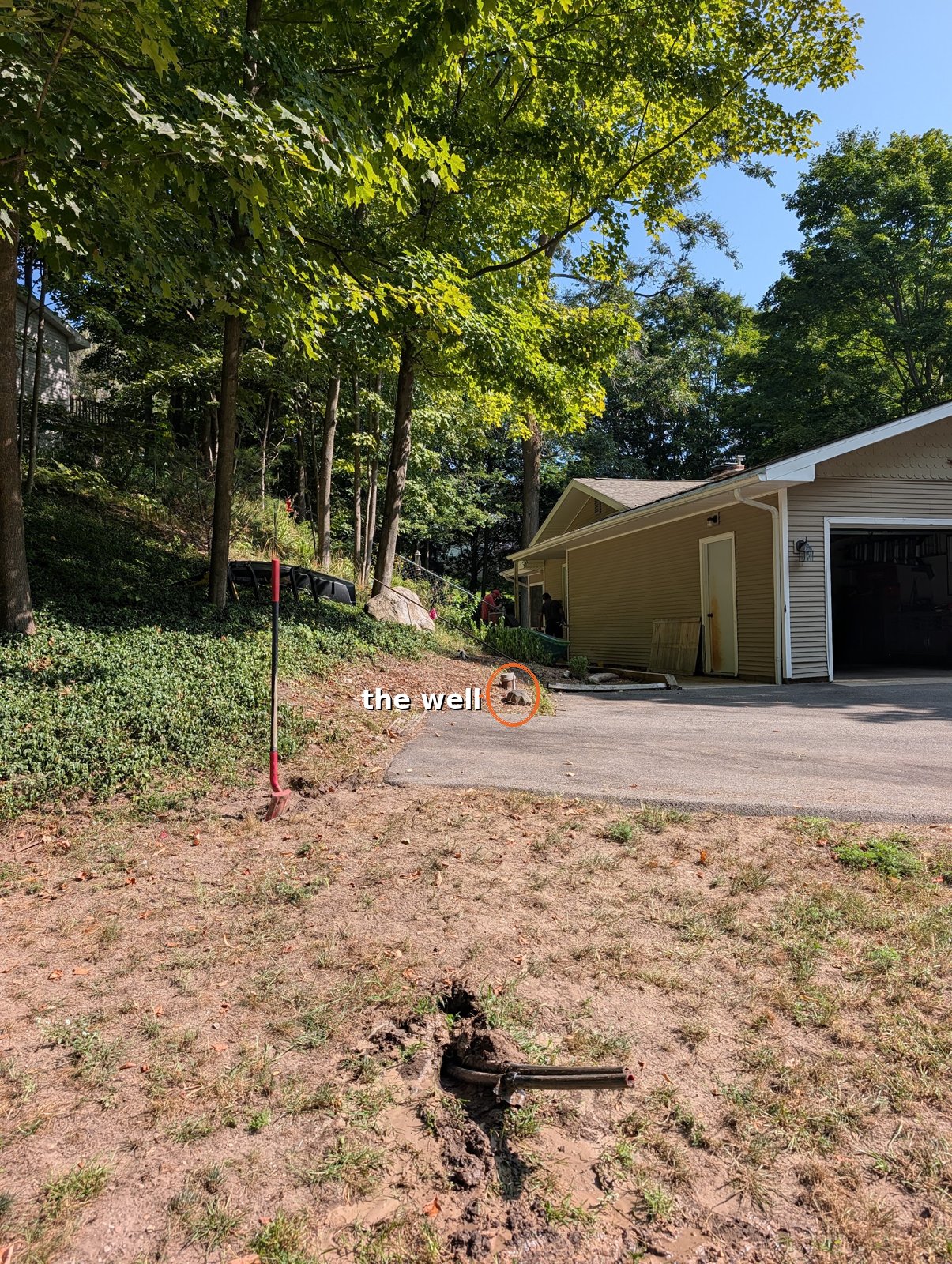
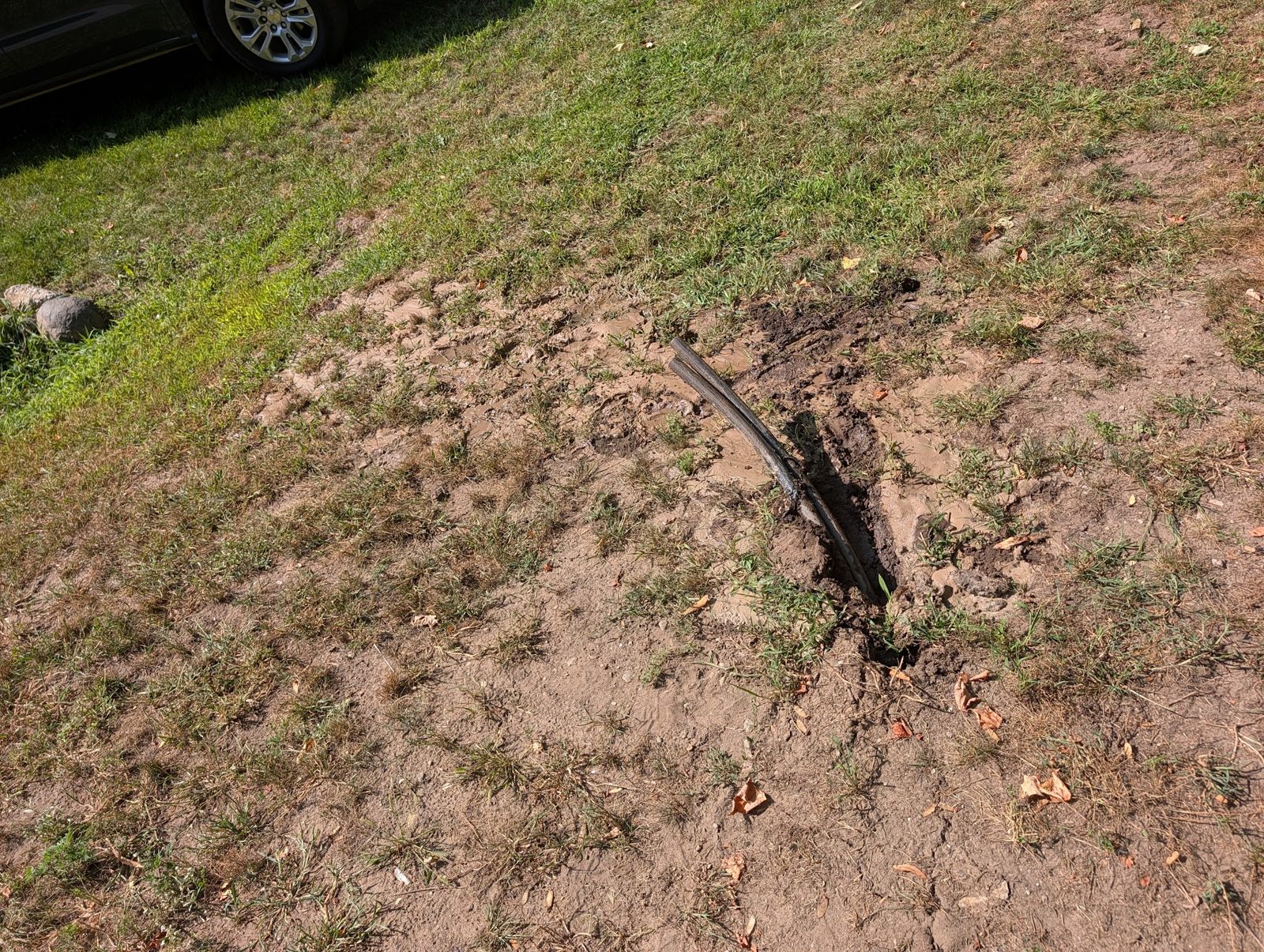
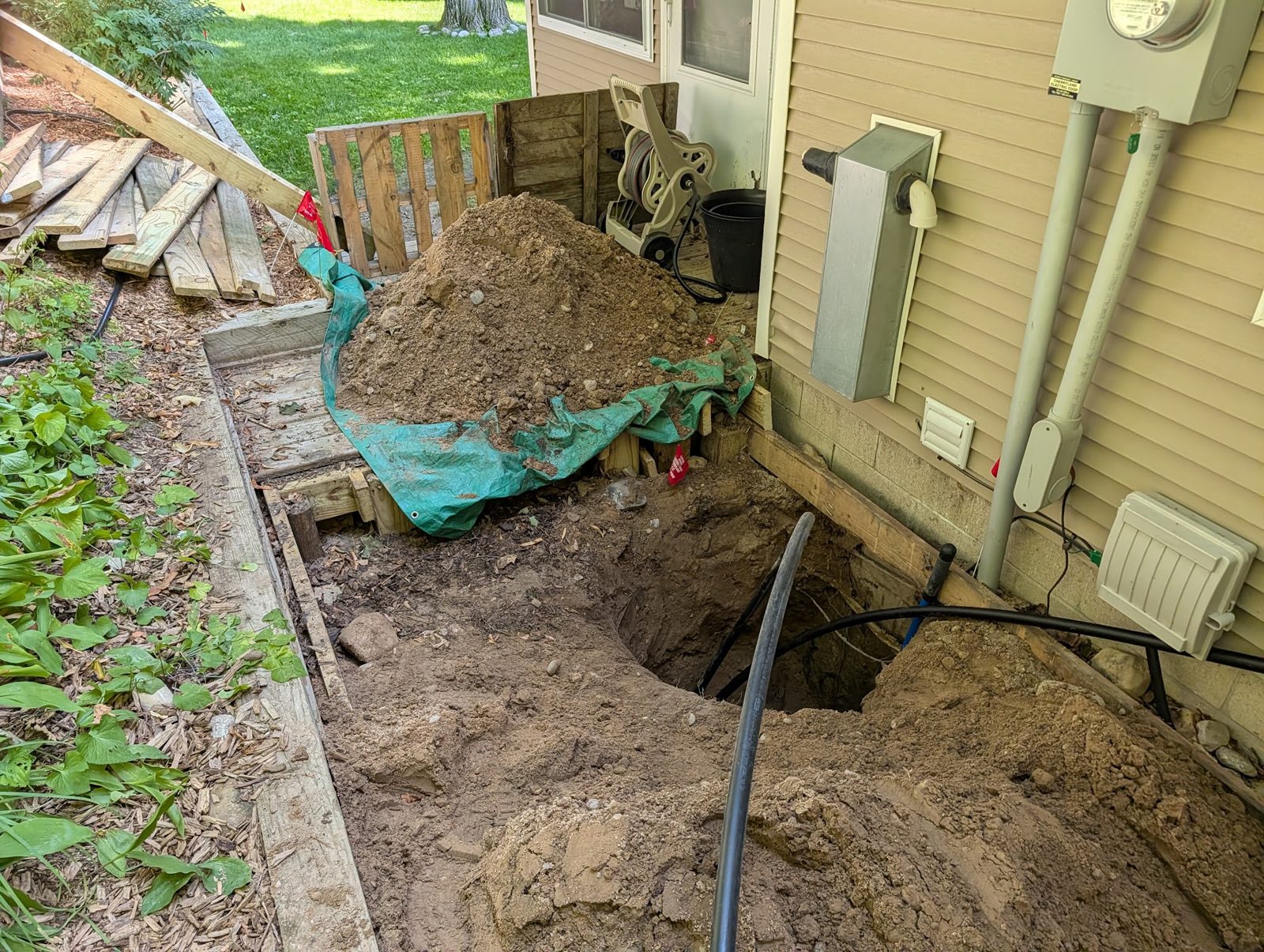
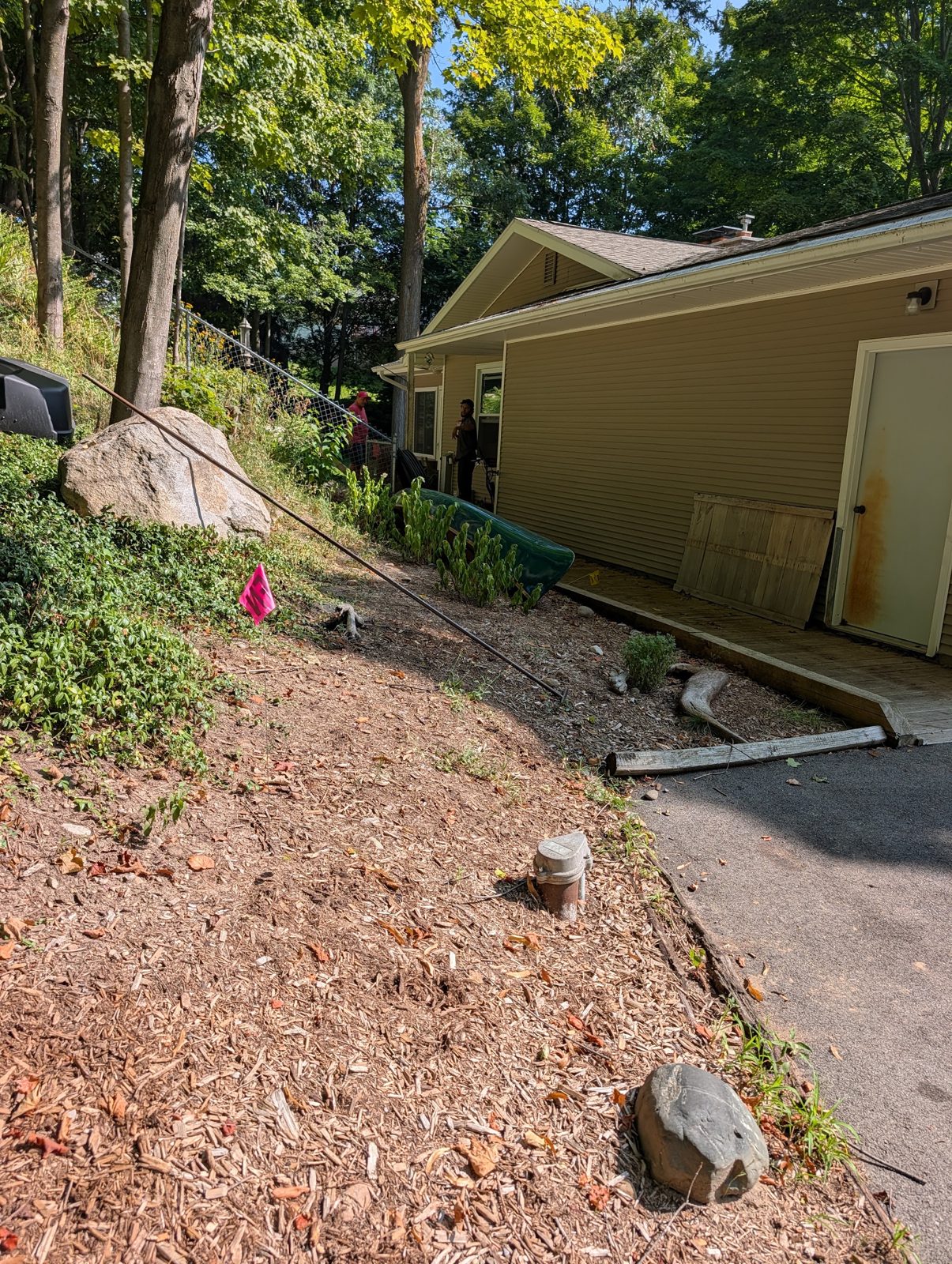
A recent one: a failing water line from the well to the house, replaced by boring under a side hill — past the gas line, the old water line, and the deck. This is all the “digging” the yard ever saw.
In and Out in a Day
Most jobs are done in a day or less, scheduled within 3 days of your call.
No Torn-Up Yard
The lawn, the trees, the driveway, the sprinkler lines — all of it stays exactly where it was.
The Math Holds Up
No topsoil to haul in, no seed, no sprinkler repairs. Add up what a trench really costs and boring often comes out ahead.
Ready to Keep Your Yard Intact?
Free estimates, no obligation. We'll show you exactly how your line goes in without a trench.
Get a Free QuoteStill have questions? Check the FAQ for answers on cost, depth, MISS DIG, and scheduling.